July 23, 2026
A developer spends three years and several million euros getting a building right. The land, the architect, the structural engineering, the finishes, the light in the living rooms at four in the afternoon.
Then the brand gets made in two weeks. At the end. By whoever is free.
That is the gap we see most often. The building is remarkable and the brand around it sells it short.
Most people use the two words as if they mean the same thing. They do not.
The logo is part of the visual identity. The mark, the colours, the typography, the way it sits on a facade or a business card.
The brand is the perception people hold of your development. It is what a buyer says about your project when you are not in the room. It is built by everything you do, not only by what you show.
Here is the part that changes how you plan a launch. That perception forms whether you manage it or not. Reputation builds either way. Branding means taking the wheel before the market decides for you.
Different names attract different buyers. Look at Aman, Soneva, Lanserhof. None of them explain what they are. They are spatial, not descriptive, and they create atmosphere in one word. A name built for the wrong buyer works against the project on every brochure it appears on for the next decade.
A useful position closes doors as well as opening them. If your development is for the family that wants quiet and permanence, it is not for the investor chasing short-term rental yield, and the brand should make that obvious. A vague position produces vague work, and vague work sells slowly.
How the project speaks. What it never says. Whether it sounds like a fund, a hotel, or a home.
Where these specific buyers actually look, and what they need to see there.
Warm and approachable, or restrained and institutional. Both are correct. Only one is correct for your buyer.
Only after all of that do we build the visual identity and the logo.
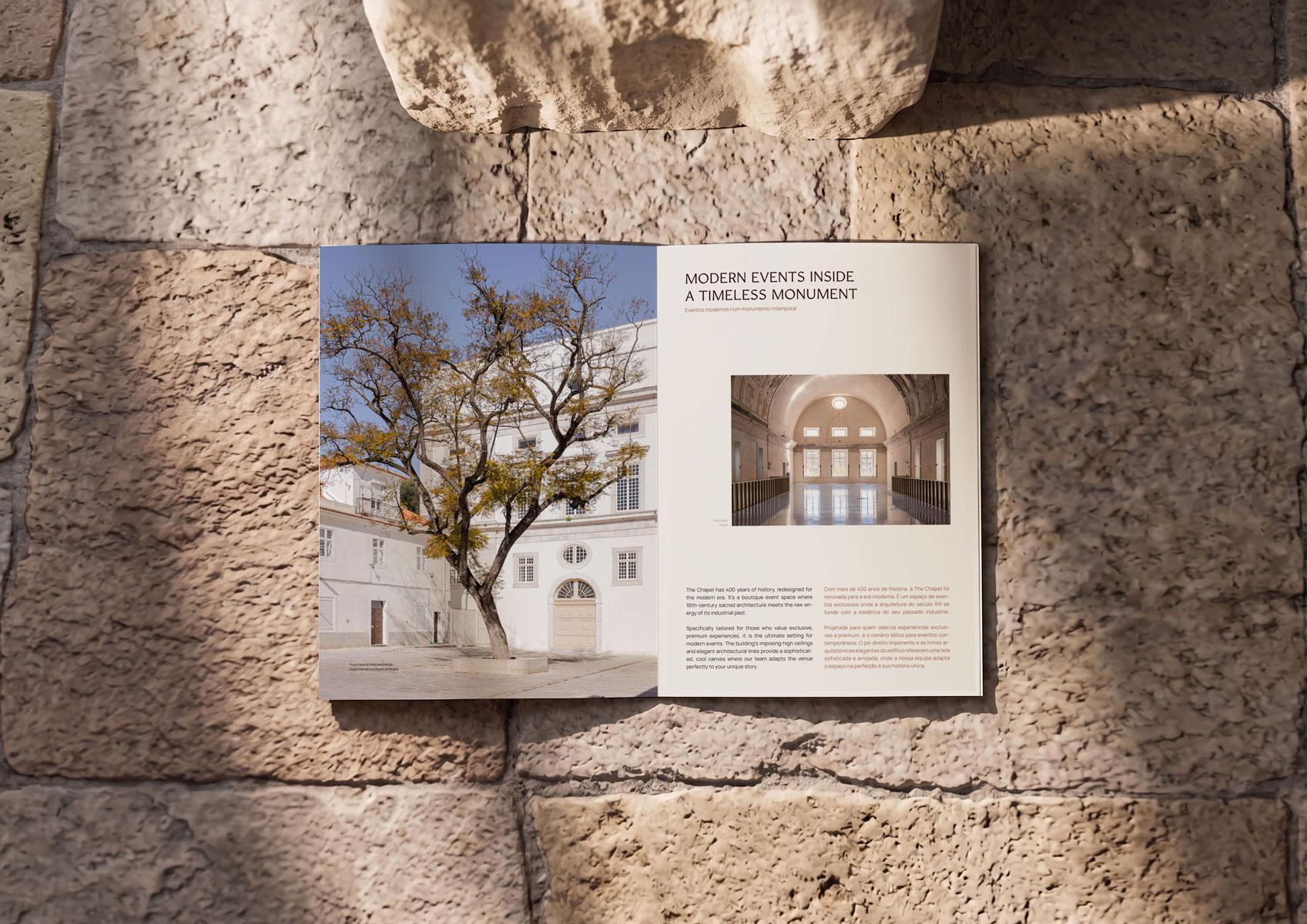
Then the brochure. Then the website. Then the sign on the building. Then we go to the printing house ourselves, to choose the paper and check the debossing depth, so the printed pieces match the identity instead of approximating it. Then the key box the buyer receives when they sign.
Every one of those is downstream of the same strategy. That is the only reason they hold together.
Trust is where this becomes commercial. Brandingmag calls trust the difference between considering and buying. In luxury property, that difference is the entire transaction.
That luxury is not the logo. It is belief, built early, by people who decided what the project meant before they decided what it looked like.
You are already branding your development. The generic name, the stock renders, the brochure that reads like every other brochure in the market: those are all positioning decisions. They just were not made on purpose.
Every choice signals something. There is no neutral option.
If you are launching a development in the next twelve months and the brand has not been decided yet, that is the moment where the decision is cheapest and the difference is largest.
We build visual infrastructure for premium physical spaces. Based in Lisbon. Creating worldwide.
Book a call with us to start a collaboration.