August 7, 2026

A render sells a fantasy of a place that doesn't exist yet. It's necessary, it's persuasive, and it disappears the moment someone walks through the actual door.
What doesn't disappear is the brochure they're still holding when they walk out. The weight of it in their hand. Whether the paper feels like something worth keeping on a shelf or something that gets left in the car.
The CGI gets someone through the door. The physical materials are what convince them the developer actually cares about quality beyond the pixels.
A cheap paper stock on an expensive development sends a message nobody intended to send. It says the finishes in the render might be exaggerated too. If the brochure for a three million euro apartment feels like a takeaway menu, the buyer's confidence in everything else quietly drops a notch, and they will not tell you why.
This is the part most launches get backwards. The render gets a budget and a specialist. The brochure gets whichever printer answers the phone fastest.
A brand is the whole impression a buyer holds of your development, built by everything they touch, not only what they see on a screen. The brochure is not marketing collateral that comes after the brand. It is the brand, in the buyer's actual hand.
So we treat print production as a brand decision. The stock. The weight. The finish on the cover, whether it's foiled, embossed, or left completely plain on purpose. These carry the same weight as the logo, because they are the last thing a buyer touches before they sign.
I go to the printing house myself for this (if i work on a project in Lisbon). Not to be romantic about it. Because a paper decision made on a screen is a guess, and the difference between a good stock and a cheap one is something you can only feel between your fingers.
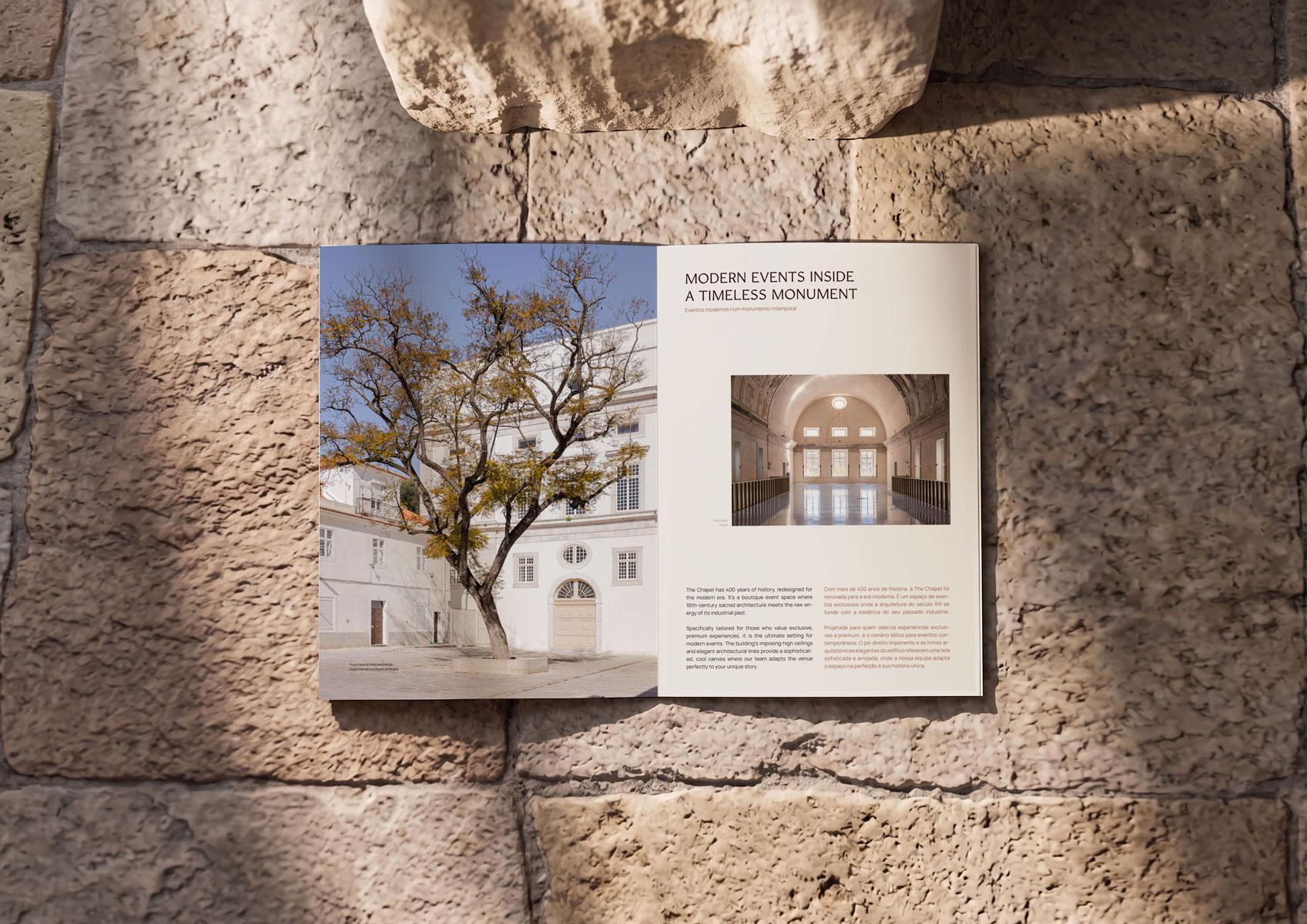
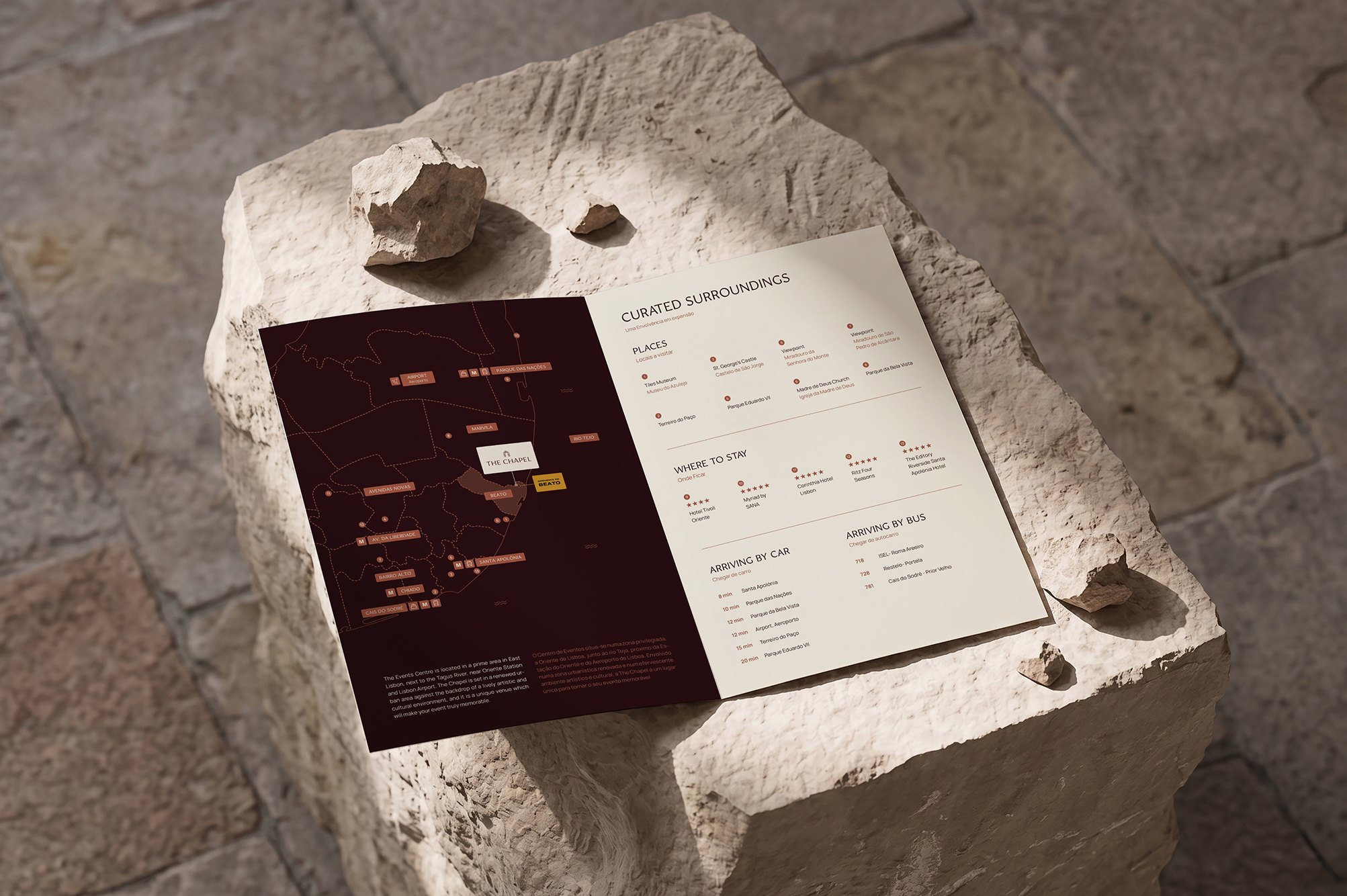
Take a recent one. For The Chapel I went to the printer six times before we signed off. The stock had to be textured, because the venue has raw, rough ceilings and the paper needed to carry that same feeling into the hand. But textured paper and offset printing made the photos read darker than the screen, so we adjusted every image to compensate. I wanted a slightly yellow paper for warmth. We tested it, and the yellow turned the photographs yellowish, so we dropped it and printed on white with a 4% yellow tint in the ink instead. The printers also spotted that changing the format by five millimetres would cut the cost with no visible difference, so we did. None of that happens over email. You feel it, you test it, you stand there and look at it under the light.
The render can be approved from a laptop. The paper cannot.
Most of the launch now happens on a screen. The first search, the website, the render, the virtual tour. All of it necessary, all of it doing real work to get a buyer to raise their hand.
But the screen is where every developer competes, and it's where every render looks roughly as good as every other render. The moment a buyer holds something is the moment your project stops being pixels and becomes real. That's where trust gets made or lost, and trust is the thing that turns a viewing into a signature.
There's a reason the strongest developments send the buyer home with something heavy. A brochure that reads like an object rather than an advert. A box with real weight to it. These are not gifts. They are the physical proof that the care in the render is care you can actually expect in the walls.
Your paper stock is already saying something. There is no neutral choice. A plain uncoated stock chosen on purpose signals restraint and confidence. The same stock chosen because it was cheapest signals the opposite, and the buyer reads it the same way either way. The only question is whether you decided what it says.
A render convinces someone to book a viewing. The paper convinces them the building will be as good as the picture.
We build visual infrastructure for premium physical spaces, digital and tactile, from the website to the paper the buyer signs on. Based in Lisbon. Creating worldwide.